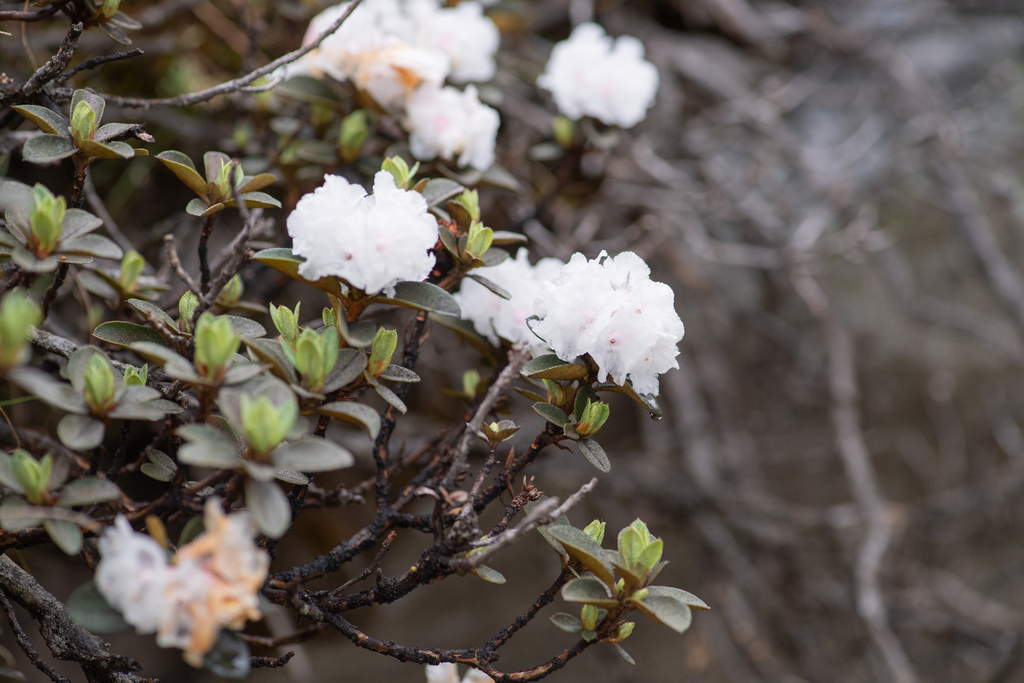
A small, aromatic rhododendron whose leaves are burned as incense in Tibetan monasteries.
- Group: Plant
- Plant type: Rhododendron
- Habitats: Shrubland, open slopes, cliff ledges
- Regions: Ü Tsang
Habitat and distribution
Thickets, open slopes and cliff ledges at 3,000–4,500(–5,000) m in southern Tibet and along the Himalaya (Flora of China).
Recorded in Ü-Tsang.
Ecological and cultural significance
A low shrub that forms dense mats above the tree line. The botanist J. M. Cowan recorded in 1937 that it 'is burnt as incense in the Tibetan monasteries'. In Tibetan medicine, related fragrant dwarf rhododendrons are used under the names da li and ba lu (Mao et al. 2025).
Threats
Branches are cut for incense; no data on whether this affects wild populations were found.
Conservation
Not assessed by the IUCN Red List (no assessment found).