
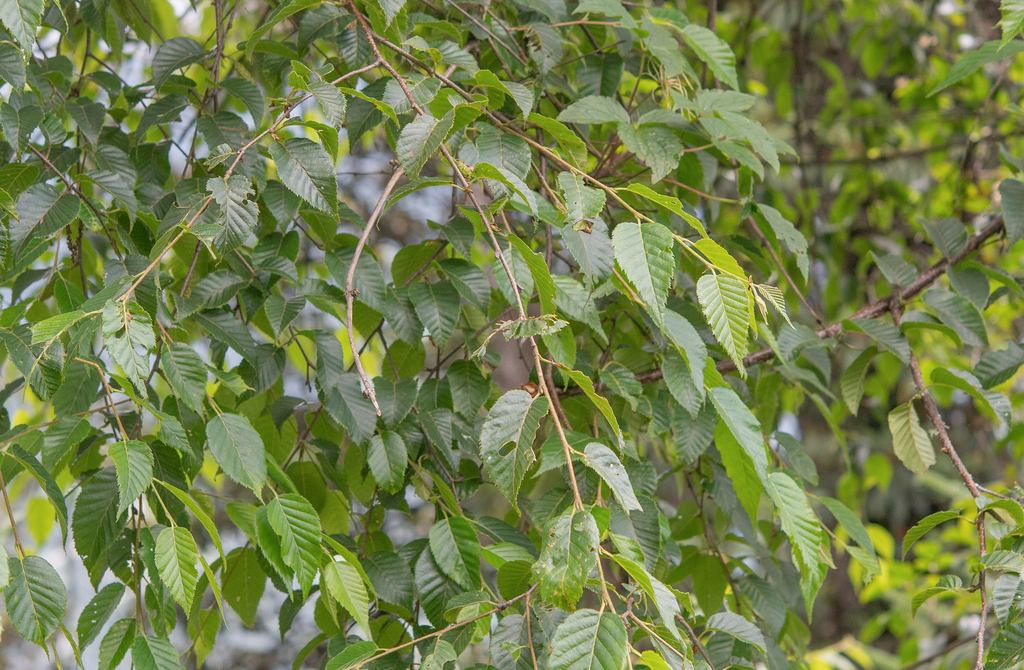
A white-barked birch of the upper forest whose paper-thin bark was used in Tibet for writing sacred texts and charms.
- Group: Plant
- Plant type: Tree
- Habitats: Subalpine forest, tree line
- Regions: Ü Tsang, Kham, Amdo
Habitat and distribution
Temperate and subalpine forest at 2,500–3,800 m in eastern and southern Tibet, western Sichuan, north-western Yunnan and further north (Flora of China).
Recorded in Ü-Tsang, Kham, Amdo.
Ecological and cultural significance
Tibetan birchbark manuscripts survive with dhāraṇī texts linked to the consecration of stupas (Korosteleva and Sizova 2024); spells written on birch bark are still worn in amulets (RBGE).
Threats
Bark stripping and cutting for fuel near settlements; no figures for Tibet were found.
Conservation
Listed as Least Concern by the IUCN.