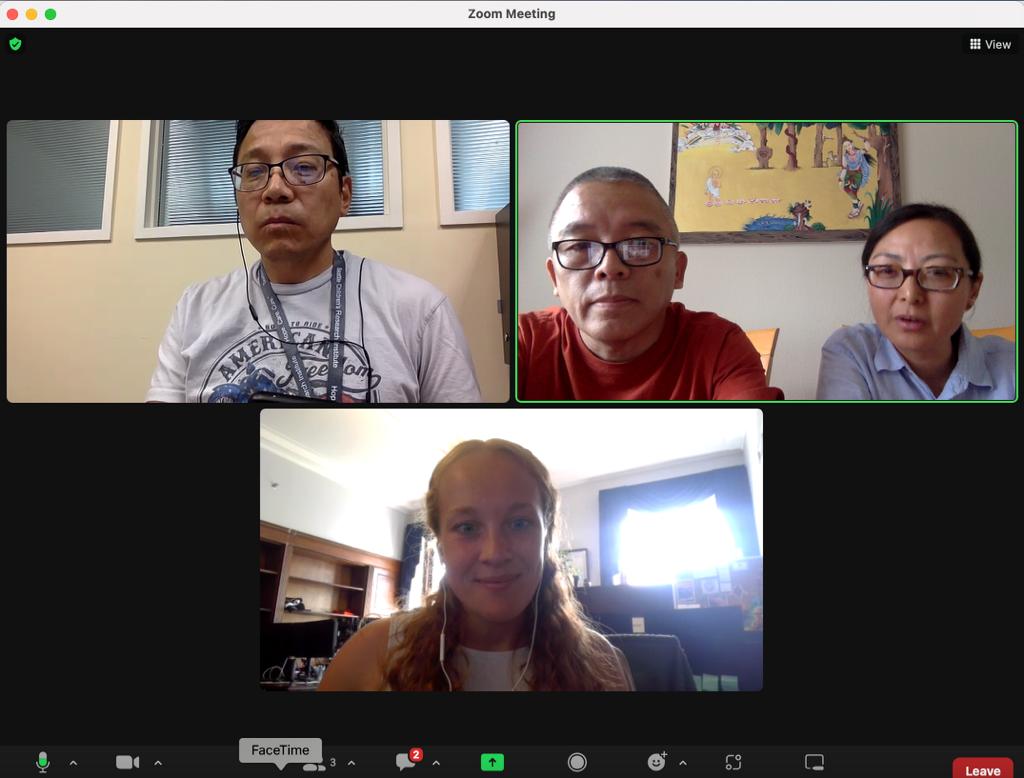
Members of the Washington State Voluntary Tibet Advocacy Group (V-TAG)—Pema Choephel, Dechen Bartso, and Lobsang Tsering—held a virtual meeting with Katherine Gillespie, a staff member in the office of U.S. Representative Marie Gluesenkamp Perez, who represents Washington’s 3rd Congressional District. The half-hour meeting focused on seeking the Congresswoman’s co-sponsorship and support for the Promoting a Resolution to the Tibet-China Dispute Act of 2023 (H.R. 533).
Lobsang Tsering introduced the participants and outlined the purpose of the meeting, emphasising the group’s efforts to engage elected representatives and raise awareness of the situation in Tibet. He also briefed Gillespie on previous engagements undertaken by Seattle-based V-TAG members and Tibetan associations in Washington State with other members of the state’s congressional delegation and a U.S. senator. These meetings formed part of a broader outreach initiative aimed at encouraging congressional attention to Tibet-related concerns and exploring legislative avenues to support dialogue between His Holiness the 14th Dalai Lama and the Chinese government.
Highlighting the Tibetan Community in Washington State
During the discussion, Pema Choephel provided an overview of the Tibetan community in the Congresswoman’s constituency. He noted that approximately 64 Tibetan families lived across four cities—Camas, Vancouver, Salmon Creek, and Battle Ground—with Vancouver having the largest concentration.
Pema also shared a brief history of Tibetan settlement in the United States, referring to the arrival of Tibetan workers in Maine during the early 1970s and the subsequent arrival of Tibetan families through the resettlement programme in the early 1990s. His remarks highlighted the community’s history and continuing presence in Washington State, as well as the importance of maintaining communication between Tibetan residents and their elected representatives.
Presenting the Significance of H.R. 533
Dechen Bartso delivered a detailed presentation on the significance of H.R. 533 for Tibetans living inside Tibet and Tibetan communities in exile. She explained the proposed legislation’s potential to encourage greater U.S. diplomatic engagement on the Tibet-China dispute and to support efforts towards dialogue.
Dechen highlighted provisions intended to strengthen the role of the U.S. Special Coordinator for Tibetan Issues in encouraging the Chinese government to engage in negotiations with representatives of the Tibetan people, including the Central Tibetan Administration. She also discussed the potential implications of the legislation for the protection of Tibetan cultural and religious identity.
Following her presentation, Dechen congratulated the Congresswoman on her public service and expressed her hope for an in-person meeting in the near future to continue the discussion.
Congressional Follow-Up
In response, Katherine Gillespie stated that she would bring the matters raised during the meeting to Representative Gluesenkamp Perez’s attention and respond as soon as possible.
The engagement represented another step in V-TAG Washington State’s continuing outreach to congressional offices. By presenting information about local Tibetan communities alongside a detailed explanation of Tibet-related legislation, the participants sought to encourage informed dialogue and sustained congressional engagement on issues affecting Tibet and the Tibetan people.