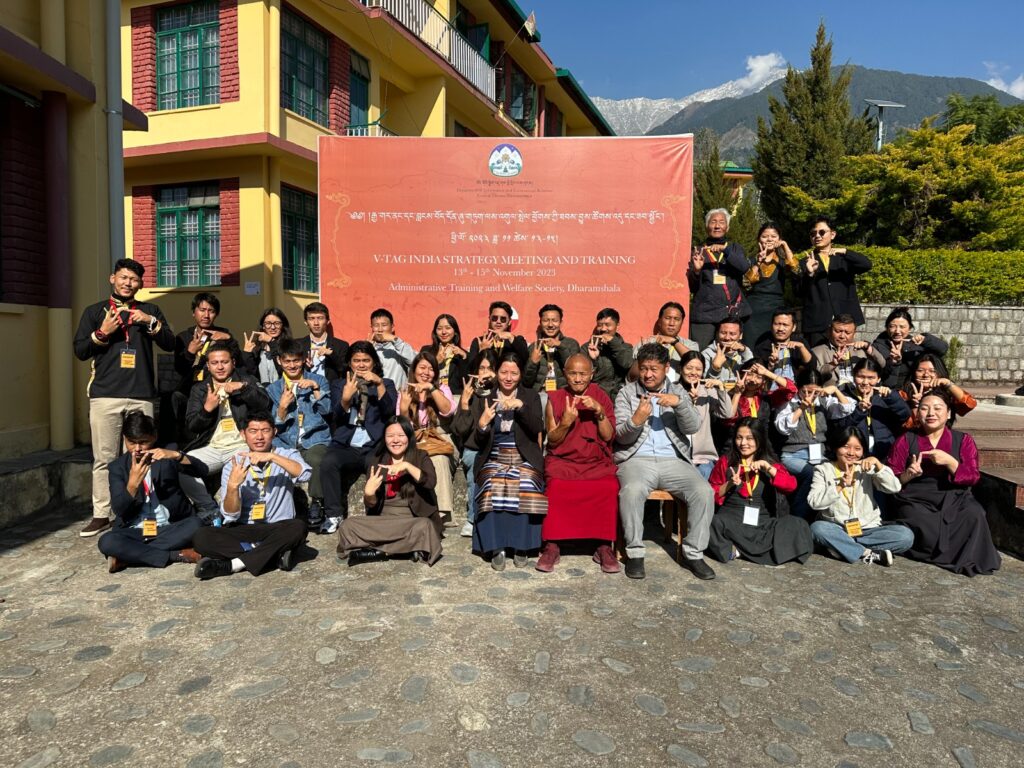
The Department of Information and International Relations (DIIR) of the Central Tibetan Administration successfully concluded the three-day India V-TAG Strategic Meeting and Training on 15 November 2023, culminating in the adoption of a consolidated, India-specific Tibet advocacy action plan. The meeting brought together 33 V-TAG members from across India to strengthen regional coordination, exchange advocacy experience, and develop a structured programme of activities for the months ahead.
During the training, participants were divided into three regional groups representing Dharamshala, New Delhi and North India, and South India. Through extensive discussions, each group developed a region-specific advocacy calendar outlining proposed initiatives to be undertaken on designated dates and in connection with relevant international observances. These regional plans were subsequently consolidated into a unified national action plan, reflecting a collective approach to strengthening Tibet advocacy throughout India.
Inaugural Session and Perspectives on Advocacy in India
The inaugural session was attended by Venerable Samdong Rinpoche, former Kalon Trisur; Shri Kishan Kapoor, Member of Parliament and supporter of Tibet; Tenzin Lekshay, Additional Secretary of DIIR and official spokesperson of the Central Tibetan Administration; and Tsewang Phuntsok, Chief Representative Officer of Shimla. Their participation underscored the importance of youth engagement, strategic planning, and sustained public awareness in Tibet advocacy.
Following the inauguration, Tsewang Phuntsok and Tashi Dickyi, a staff member of the India Tibet Coordination Office (ITCO), New Delhi, provided participants with an overview of advocacy efforts in India. Drawing on their experience engaging with regional Indian leaders and conducting awareness programmes for Indian citizens and university students, they shared practical insights into public outreach, relationship-building, and communicating Tibet-related issues to diverse audiences.
Developing a Practical Advocacy Framework
On the second day, Tenzin Lekshay introduced V-TAG and discussed the importance of initiatives that equip young Tibetans with the knowledge and organisational capacity to engage in advocacy. Rinchen, staff member of DIIR’s Tibet Advocacy Section and Coordinator for V-TAG India, subsequently presented the Tibet Advocacy Action Plan adopted at the International Tibet Youth Forum held from 18 to 20 July 2023.
The presentations were followed by interactive question-and-answer sessions, allowing participants to clarify key concepts, exchange perspectives, and raise questions about the practical implementation of advocacy initiatives. The discussions then shifted towards adapting the existing framework to India’s specific context.
Working in their three regional groups, participants examined proposed activities, shared their individual experiences, and assessed how advocacy initiatives could be implemented realistically within their respective regions. This collaborative process helped transform broader advocacy objectives into more concrete, locally relevant plans.
First-Hand Testimonies and Human Rights Briefings
The final day featured an address by Venerable Ngawang Woebar, a former Tibetan political prisoner, who shared his personal experiences of protesting inside Tibet against Chinese government policies and his subsequent detention in Chinese prisons. He spoke about concerns regarding the preservation of Tibetan identity, particularly the Tibetan language, culture, religion, and environment.
Venerable Ngawang Woebar encouraged Tibetan youth to engage with people from diverse backgrounds and the Indian public to raise awareness of Tibet and the experiences of the Tibetan people. His testimony prompted an extensive question-and-answer session, with participants actively seeking further insights into the situation inside Tibet.
Tenzin Kunkhen of DIIR also briefed participants on the human rights situation inside Tibet. His presentation examined reported cases and concerns involving religious repression, language and cultural assimilation, arrests and detention, and political imprisonment. The session provided participants with additional context for understanding human rights issues and communicating them through informed advocacy.
A Unified Action Plan for V-TAG India
The meeting concluded with the adoption of a consolidated India-wide advocacy action plan, compiled from proposals developed by all three regional groups. The plan established a shared framework for coordinating activities across India while allowing each region to pursue initiatives suited to its circumstances and priorities.
In his concluding remarks, Additional Secretary Tenzin Lekshay expressed appreciation for the participation and active contributions of V-TAG members. He acknowledged the engagement of the younger generation and their role in developing practical approaches to Tibet advocacy.
The India V-TAG Strategic Meeting and Training marked an important step towards strengthening the group’s national coordination and long-term planning. By bringing regional perspectives together within a common framework, the initiative laid the groundwork for more organised, consistent, and collaborative advocacy efforts across India.