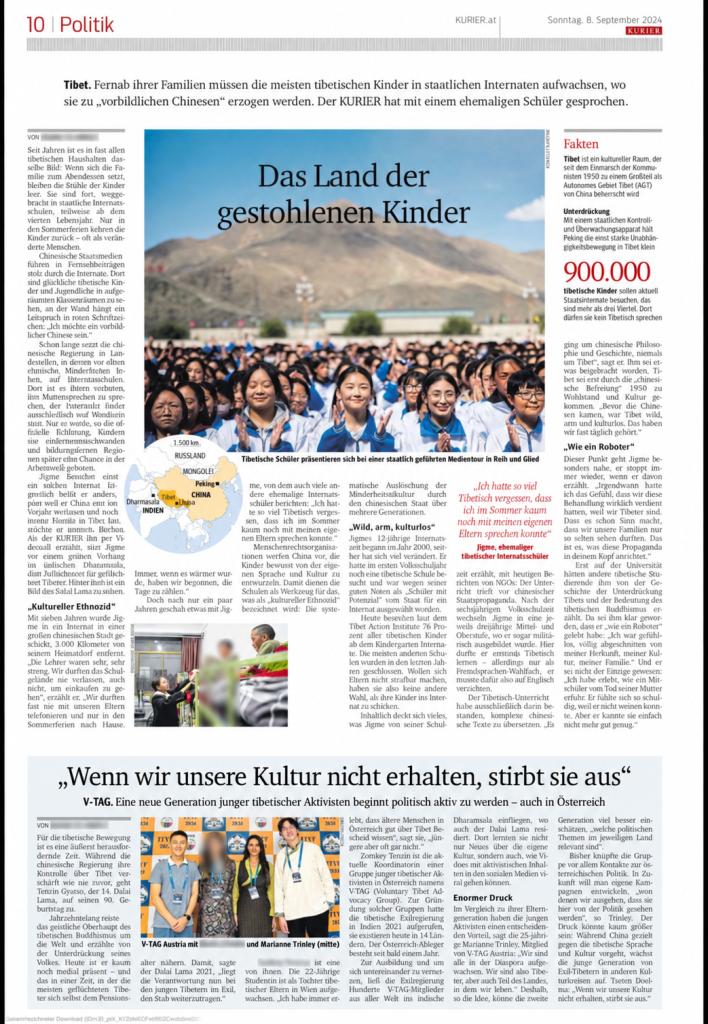
An Austrian newspaper, KURIER, featured the experiences of Tibetan communities and young Tibetan advocates in an article examining the preservation of Tibetan identity, culture, and language. The coverage highlighted concerns surrounding the education of Tibetan children in China, the challenges facing Tibetan cultural continuity, and the growing involvement of young Tibetans in advocacy efforts across Europe.
Titled “When We Do Not Preserve Our Culture, It Dies Out,” the article explored the importance of safeguarding Tibetan heritage and passing it on to future generations. It also highlighted the experiences and perspectives of young Tibetan activists working to ensure that Tibetan identity remains visible and meaningful among younger generations living in exile.
Highlighting the Voices of Young Tibetan Advocates
The feature included perspectives from V-TAG Austria and highlighted the work of young Tibetan advocates, including Zomkey Tenzin, in raising awareness of Tibetan identity and cultural preservation. It explored how younger generations are taking on greater responsibility for sustaining their heritage while engaging with contemporary social and political issues.
The article also examined concerns regarding Tibetan children’s education in China, including the reported separation of children from their families and the effects of state-run boarding schools on Tibetan language, culture, and identity. These issues were presented alongside the experiences of Tibetan communities seeking to preserve their traditions and strengthen cultural connections in exile.
Preserving Tibetan Identity Across Generations
The coverage underscored the role of youth-led initiatives in keeping Tibetan culture and identity at the forefront of public discussion. For V-TAG Austria, the feature offered an opportunity to bring the perspectives of young Tibetan advocates to a wider Austrian audience and draw attention to the importance of cultural preservation.
The article reflects a broader message shared by Tibetan advocates: preserving a language, culture, and collective identity requires active participation across generations. Through community engagement, public awareness, and youth leadership, V-TAG members continue to contribute to conversations about Tibetan heritage and its future.