
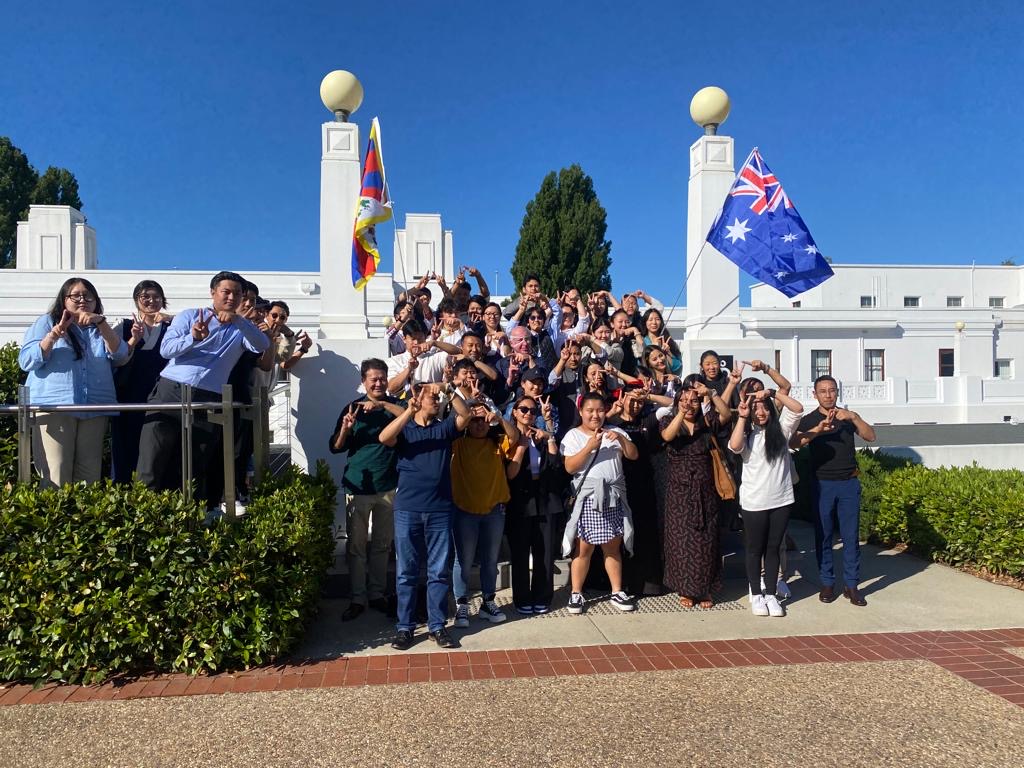
The second day of the V-TAG Australia Strategy Meeting and Advocacy Training concluded with significant developments for the group, including the appointment of regional coordinators and the formulation of a unified action plan to strengthen and sustain Tibet advocacy across Australia. The discussions focused on establishing regional priorities, enhancing coordination, and building a structured framework for advocacy initiatives over the coming year.
Karma Choeying, Secretary of the Department of Information and International Relations (DIIR), Central Tibetan Administration (CTA), delivered the concluding remarks, outlining the respective roles of V-TAG and the CTA in advancing advocacy efforts. He emphasised the important contributions of V-TAG members and Tibetan youth in raising awareness, strengthening regional engagement, and sustaining advocacy initiatives. He also commended the participants for their collaborative efforts and encouraged their continued commitment to their shared objectives.
Tsetan Dolma, V-TAG Australasia Regional Coordinator from the Tibet Advocacy Section of the CTA, presented the action plans of the International Tibet Youth Forum 2023 and shared insights drawn from the forum. Her presentation provided participants with perspectives and experiences that could inform their regional planning and future advocacy activities.
The programme continued with group discussions in which participants divided into regional groups to elect their respective coordinators and develop action plans tailored to the needs and priorities of their regions. Each group discussed proposed strategies and initiatives for the year ahead before presenting its regional action plan to the wider gathering.
Following these presentations, the newly appointed regional coordinators worked alongside DIIR representatives and the V-TAG Australasia Coordinator to consolidate the regional proposals into an overall Australia Action Plan. The consolidated plan was subsequently presented collectively by the regional coordinators, establishing a shared framework for coordinated advocacy across the country. Participants also agreed to convene virtually to further discuss and develop the proposed initiatives.
The conclusion of the strategy meeting marked an important step towards strengthening V-TAG Australia’s structure and regional coordination. With regional coordinators appointed and a collective action plan established, members departed with a clearer framework for collaboration, planning, and sustained advocacy throughout the year ahead.