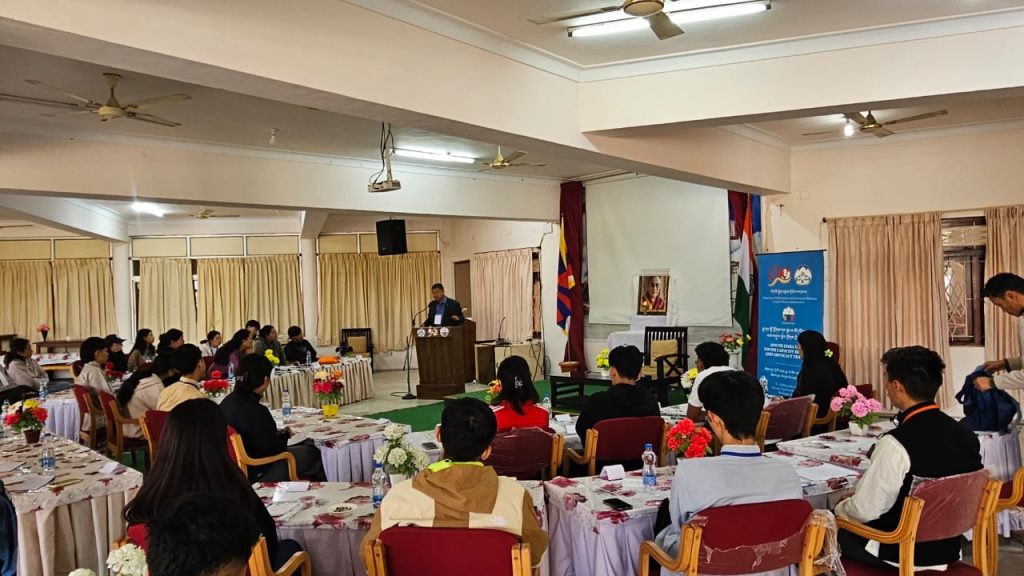
The Department of Information and International Relations (DIIR) of the Central Tibetan Administration commenced a three-day South India V-TAG Advocacy and Capacity Building Training on 26 December 2025 at Sera Jey Yiga Choeling Guest House in Bylakuppe, Karnataka. Bringing together approximately 35 Tibetan students from universities and colleges across Bengaluru, Mangaluru, Mysuru, Mundgod, and Bylakuppe, the programme aims to strengthen youth leadership and equip participants with practical skills in advocacy, communication, digital engagement, and community outreach.
The training seeks to encourage Tibetan youth to take an active role in raising awareness about Tibet and engaging with wider Indian society. Through expert-led sessions and interactive discussions, participants are gaining insights into how strategic communication, meaningful networking, and responsible digital advocacy can strengthen public understanding of Tibet-related issues across South India.
Strengthening Youth Leadership and Public Engagement
Addressing the inaugural session, DIIR Additional Secretary Tenzin Lekshay emphasised the importance of Tibetan youth taking ownership of advocacy initiatives, particularly within India’s evolving political and social landscape. He highlighted the need to make Tibet-related issues relevant to Indian audiences, foster meaningful relationships with Indian peers, and build greater public engagement while preserving Tibetan identity and cultural heritage.
Tenzin Lekshay also led sessions on communication, networking, and media relations, highlighting their importance in amplifying Tibetan voices and building broader public and international awareness. Participants explored how clear messaging, effective relationship-building, and strategic outreach can help communicate Tibet-related concerns to diverse audiences.
Digital Advocacy, Artificial Intelligence, and Cybersecurity
V-TAG India National Coordinator Kunsang Tenzing delivered a session on leveraging social media for advocacy, emphasising the value of authentic storytelling and the opportunities digital platforms offer for reaching wider audiences. The session encouraged participants to consider how online communication can be used effectively and responsibly to strengthen awareness and engagement.
The afternoon session featured Lobsang Gyatso Sither, Director of Technology at the Tibet Action Institute and a Member of the Tibetan Parliament-in-Exile. He conducted an in-depth training on artificial intelligence, effective social media advocacy, and digital security, with particular attention to protecting members of the Tibetan community from cyber threats.
The sessions highlighted the growing importance of digital literacy and cybersecurity in contemporary advocacy. Participants were introduced to practical considerations for using technology responsibly, communicating effectively online, and safeguarding digital activities.
Building Connections Through Cultural Exchange
The programme began informally on 25 December 2025 with participant registration and an ice-breaking session designed to encourage interaction among students from different regions. The evening continued with a community “Momo Night,” during which participants prepared momos together for dinner, creating an opportunity to build friendships and strengthen a sense of shared community.
The gathering also included a documentary screening on human rights violations in Tibet under Chinese rule, followed by an interactive question-and-answer session. The discussion provided participants with an opportunity to reflect on the issues presented and engage with one another before the formal training began.
Empowering the Next Generation of Tibetan Advocates
Scheduled to conclude on 28 December 2025, the South India V-TAG Advocacy and Capacity Building Training reflects the Central Tibetan Administration’s ongoing efforts to develop an informed, skilled, and engaged younger generation. By combining advocacy training, professional communication, digital tools, and community-building activities, the programme seeks to prepare participants to contribute more effectively to grassroots initiatives and Tibet-related awareness efforts.
The participation of students from multiple South Indian regions also creates opportunities for stronger connections among young Tibetans and greater coordination across local communities. The training underscores the importance of youth leadership, collaboration, and sustained engagement in strengthening advocacy efforts for Tibet.