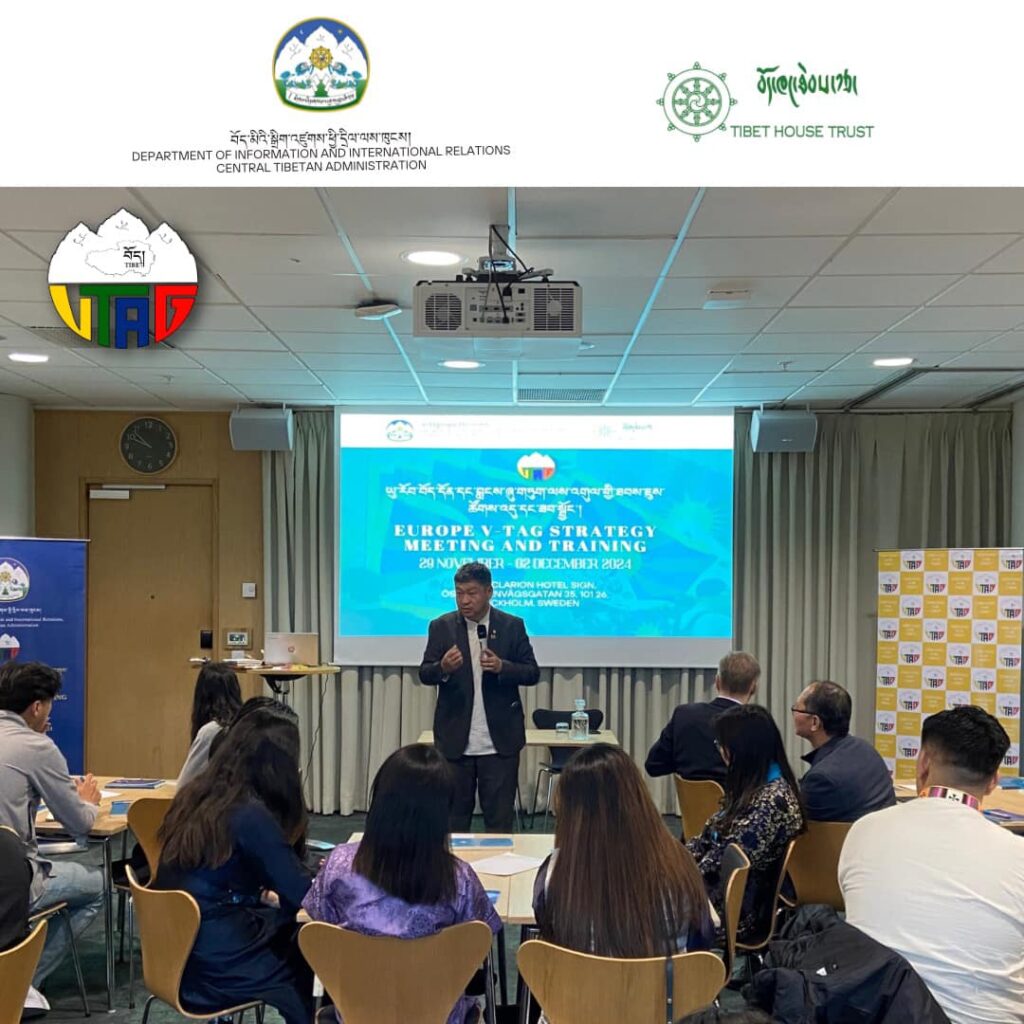
More than 30 young Tibetans representing six European regions—Sweden, the United Kingdom, Norway, France, Belgium, and the Netherlands—gathered in Stockholm, Sweden, for a three-day Europe V-TAG Strategy Meeting and Training. Organised by the Department of Information and International Relations (DIIR) of the Central Tibetan Administration (CTA), with local facilitation by the Tibetan Community in Sweden, the meeting brought together young advocates to strengthen regional coordination, develop advocacy skills, and establish a shared vision for future initiatives across Europe.
The gathering provided a platform for participants to exchange experiences, review ongoing activities, and explore strategies for strengthening youth-led advocacy. It also underscored the importance of investing in the next generation of Tibetan leaders and building stronger connections among V-TAG groups operating under the jurisdiction of the Offices of Tibet in London and Brussels.
Strengthening Youth Leadership and Strategic Advocacy
The meeting opened with a welcome address by Lobsang, President of the Tibetan Community in Sweden. This was followed by an inaugural address from Tenzin Lekshay, Official Spokesperson and Additional Secretary for International Relations at DIIR.
In his address, Tenzin Lekshay emphasised the importance of empowering young Tibetans to take an active role in advocacy and preparing them for future leadership responsibilities. He highlighted the need to strengthen their knowledge, communication abilities, and organisational capacities so they can contribute effectively to advocacy initiatives within their respective communities and across Europe.
European Perspectives on Tibet Advocacy
The first day’s programme featured a presentation by Mattias Bjornerstedt, Chairperson of the Swedish Tibet Committee, who discussed the challenges and opportunities facing Tibet advocacy in Europe. Drawing on his extensive experience, he offered insights into the European advocacy landscape and explored opportunities for strengthening public engagement and support.
Country coordinators from V-TAG groups in the United Kingdom, Belgium, France, and the Netherlands also presented reports on their activities. The presentations provided an opportunity to reflect on previous initiatives, share regional experiences, and outline priorities for future engagement.
These exchanges encouraged participants to identify common objectives while recognising the distinct opportunities and challenges facing advocacy groups in different European countries. The discussions also highlighted the value of coordination and knowledge-sharing in developing more connected and sustainable regional initiatives.
Building Practical Advocacy Skills Through Training
In the afternoon, Wangpo Tethong, Executive Director of the International Campaign for Tibet (ICT), Europe, led a training session on effective advocacy. Through interactive discussions and group exercises, participants explored approaches to strengthening their advocacy skills and translating their objectives into practical initiatives.
The session encouraged participants to consider how strategic planning, collaboration, and effective communication could support their work at both local and regional levels. By combining practical training with shared experiences, the programme aimed to equip young Tibetans with tools they could apply within their respective V-TAG groups.
The day’s proceedings concluded with a cultural celebration featuring traditional Tibetan dances. The performances provided an opportunity for participants to celebrate their shared heritage and reinforce the cultural connections that unite Tibetan communities across Europe.
A Gathering of Tibetan Representatives and Community Leaders
The strategy meeting was attended by several distinguished representatives and community leaders, including Ven. Thupten Wangchen and Thupten Gyatso, Members of the Tibetan Parliament-in-Exile representing Europe; Thupten Tsering, Coordinator of the Office of Tibet in France; Tenzin Kunga, Secretary of the Office of Tibet in London; Tenzin Phuntsok, EU Coordinator of the Office of Tibet in Brussels; and Ngawang Choedhar, DIIR Project Officer.
Their participation brought together perspectives from Tibetan institutions, international advocacy organisations, and community networks, providing participants with opportunities to engage with individuals involved in advancing Tibetan interests across Europe.
Building a Coordinated Future for V-TAG Europe
The Europe V-TAG Strategy Meeting and Training represented an important opportunity to strengthen relationships among young Tibetan advocates and develop a more coordinated approach to regional engagement. By combining country-level reports, expert-led training, strategic discussions, and cultural exchange, the programme encouraged participants to build on existing initiatives and identify new avenues for collaboration.
The meeting reaffirmed the importance of youth leadership in sustaining advocacy efforts across Europe. Through continued capacity building, regional cooperation, and grassroots engagement, V-TAG groups aim to strengthen their capabilities as groups and expand awareness of Tibet among diverse European audiences.