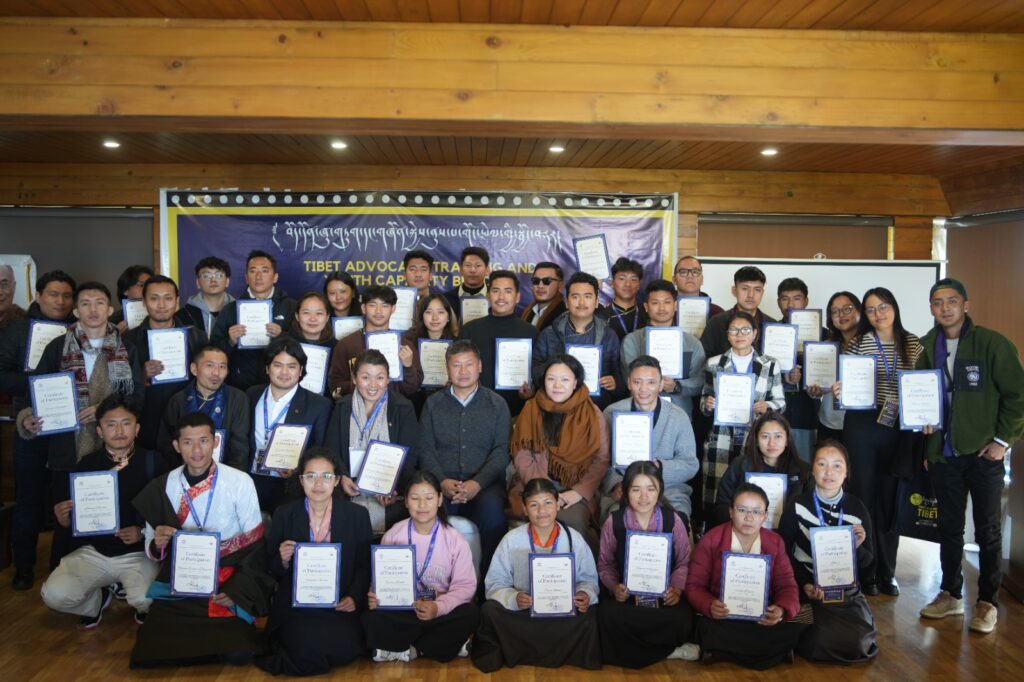
The Department of Information and International Relations (DIIR) of the Central Tibetan Administration successfully concluded its Tibet Advocacy Training and Youth Capacity-Building Programme for members of the Voluntary Tibet Advocacy Group (V-TAG) from North India on 29 January 2024. Conducted over four days, from 26 to 29 January, the programme aimed to strengthen participants’ understanding of Tibet-related advocacy and equip young volunteers with the knowledge and skills needed to engage more effectively in awareness-building initiatives.
The programme began with an introductory session that brought participants together and established the foundation for the subsequent training sessions. On the second day, prominent representatives from Tibetan advocacy and civil society organisations participated in a panel discussion, sharing their experiences and perspectives on advocacy strategies. Speakers included the India National Director of Students for a Free Tibet, a researcher from Tibet Watch, the President of the Tibetan Youth Congress, and the Vice President of the Tibetan Women’s Association. Karma Choeying, Secretary of DIIR, also addressed the gathering as the chief guest, highlighting the importance of youth participation in advocacy efforts.
On the penultimate day, participants made a declaration affirming their commitment to advocating for Tibet. A feedback session was also held, providing an opportunity for participants to share their reflections, discuss key takeaways, and offer insights on the training programme.
The concluding session on 29 January was attended by Tenzin Lekshay, Additional Secretary of DIIR. In his address, he spoke about Tibet’s cause, the importance of networking, and the principles of effective advocacy. His remarks underscored the value of building meaningful connections, communicating issues clearly, and developing the practical skills necessary for sustained advocacy.
The programme marked an important capacity-building opportunity for North India V-TAG members, bringing together youth volunteers and experienced advocates to exchange knowledge and strengthen their approach to public engagement. Through such training initiatives, V-TAG members can continue developing their skills and contributing to informed, organised, and constructive advocacy for Tibet.