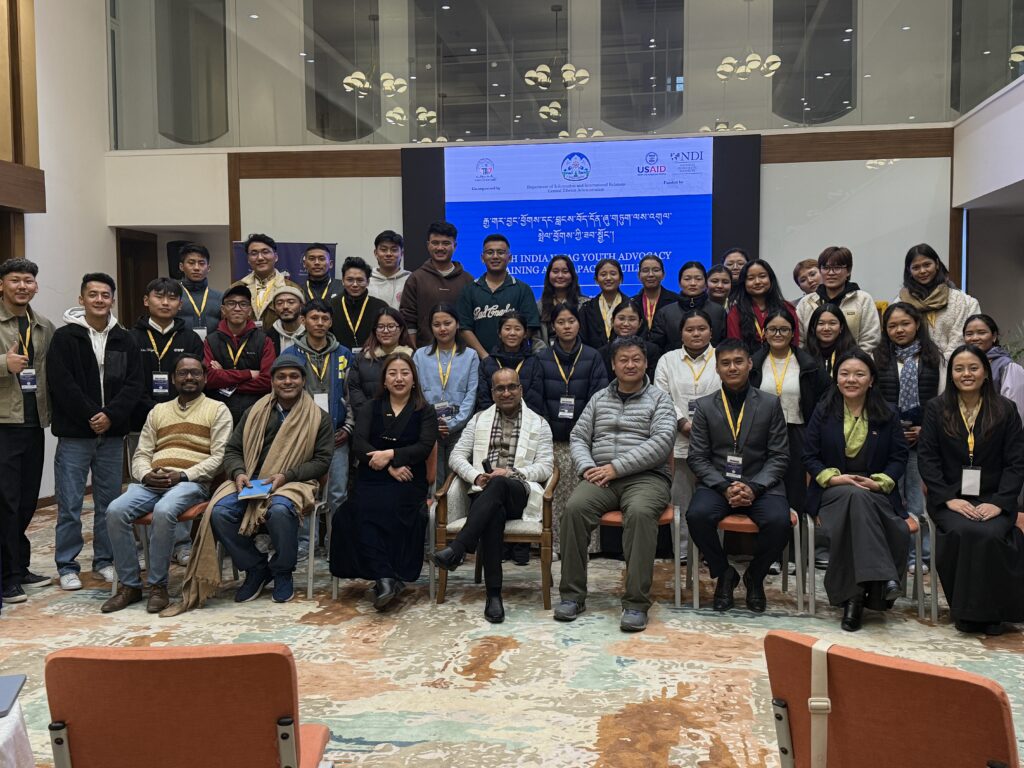
The Department of Information and International Relations (DIIR) successfully concluded a three-day V-TAG Capacity Building and Advocacy Training Programme from 3 to 5 January 2025, bringing together 35 participants for intensive sessions on advocacy, digital engagement, human rights, environmental protection, and political outreach. The programme aimed to equip participants with practical knowledge and strategic tools to strengthen Tibet-related awareness and develop coordinated advocacy initiatives across North India.
Through expert-led presentations, interactive discussions, and regional action planning, the training provided participants with opportunities to deepen their understanding of Tibet-related issues while developing approaches for engaging local communities, digital audiences, and political representatives.
Day Two: Digital Advocacy, Human Rights, and Environmental Protection
The second day opened with Tenzin Thayai from the Tibet Action Institute, who conducted a session on strategic social media advocacy. Participants explored ways to amplify Tibet-related initiatives, communicate effectively through digital platforms, and engage online communities.
Dr Lobsang Yangtso from ITN followed with a presentation on the preservation of Tibet’s ecosystem, highlighting environmental concerns and the importance of broader awareness and international engagement. Tenzin Kunkhen then delivered an in-depth session on the human rights situation in Tibet, examining contemporary challenges and discussing potential approaches for advocacy.
In the afternoon, Rinchen from DIIR’s Tibet Advocacy Section introduced participants to the V-TAG initiative. Tenzin Lhatso, Delhi Coordinator of V-TAG India, subsequently shared insights into the group’s mission, activities, and previous advocacy efforts, helping participants understand how coordinated grassroots initiatives can contribute to wider awareness.
Indian Parliamentary Perspectives on Tibet
A key highlight of the programme was an address by Shri Sujeet Kumar, Member of the Rajya Sabha, titled “Why Tibet Matters: Indian Political Perspective on Tibet.” The session introduced participants to an Indian parliamentary perspective on Tibet and provided an opportunity to consider the relevance of Tibet-related issues within India’s political and public discourse.
Tenzin Lekshay, Additional Secretary of DIIR, led a further session on advocacy at local and national levels. His presentation explored approaches to building public awareness and strengthening engagement across different communities and institutions. The day concluded with group discussions in which participants began developing regional action plans tailored to their respective areas.
Final Day: Historical Understanding and Political Outreach
The final day began with an academic perspective from Jigme Yeshi Lama, Assistant Professor in the Department of Political Science at the University of Calcutta. His session examined Tibet’s modern history and the significance of the Himalayan region in understanding and addressing the Tibet issue.
Participants continued their group discussions and presented proposed advocacy activities for implementation in their respective regions. These presentations provided an opportunity to translate the knowledge gained during the training into practical initiatives and identify ways to sustain engagement beyond the programme.
Tashi Dickey, Coordinator of the India Tibet Coordination Office (ITCO) in New Delhi, conducted the final training session on advocating for Tibet with Indian parliamentarians and political leaders. The session focused on the importance of structured engagement with elected representatives and political institutions as part of broader advocacy efforts.
Regional Action Plans and a Commitment to Continued Engagement
The training concluded with an interactive question-and-answer session involving the speakers, followed by the distribution of participation certificates. Participants reaffirmed their commitment to implementing their regional action plans and applying the skills and knowledge gained during the three-day programme.
By bringing together expertise in digital advocacy, environmental issues, human rights, political engagement, and Tibetan history, the training provided participants with a broad foundation for developing informed and coordinated advocacy initiatives.
The programme marked an important capacity-building effort by DIIR to strengthen grassroots engagement and support the development of a more informed and capable network of V-TAG advocates across North India. Its emphasis on practical skills, regional collaboration, and action planning highlighted the importance of sustained youth participation in raising awareness about Tibet and engaging diverse audiences at local and national levels.