
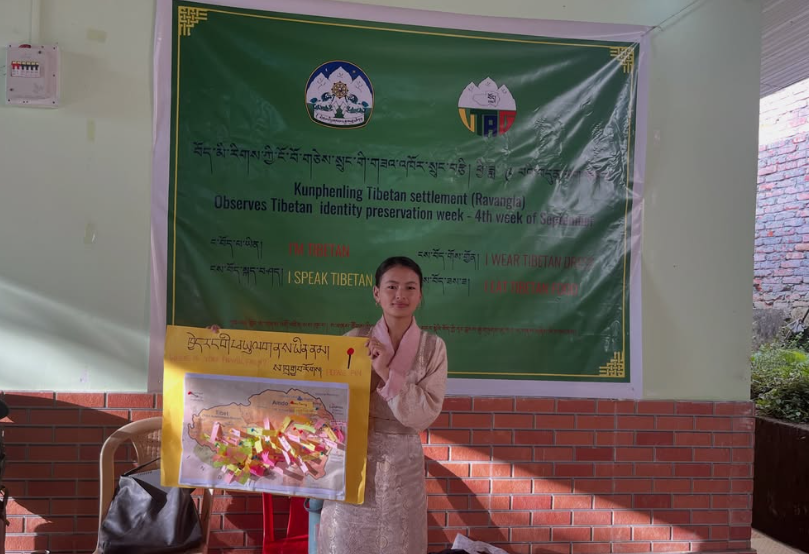
V-TAG Sikkim organised a community initiative titled “Where Is Your Phayul From?” at Kunpheling Tibetan Settlement in Ravangla, inviting Tibetans of different generations to identify their ancestral regions on a map of Tibet. Through this simple yet meaningful activity, participants were encouraged to reconnect with their roots and reflect on the importance of preserving their family histories, regional identities, and cultural heritage.
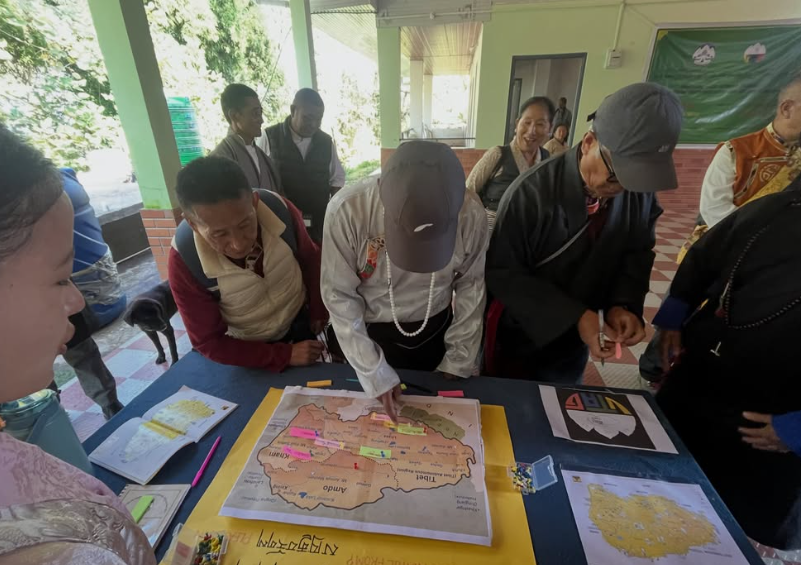
The initiative brought together students, young people, and elders, who were invited to locate their Phayul—their ancestral homeland or region of origin—on the map. Many participants confidently identified and marked places such as Lhasa, Kham, Amdo, and Shigatse, demonstrating their familiarity with their ancestral roots. However, some participants were unable to identify the names of their ancestral regions, highlighting the importance of creating opportunities for intergenerational learning and cultural awareness.
Remembering Our Roots, Preserving Our Identity
The activity aimed to encourage conversations about Tibetan identity and the importance of passing ancestral knowledge from one generation to the next. Knowing one’s Phayul is more than identifying a location on a map; it can serve as a connection to family history, regional traditions, language, and a shared cultural inheritance.
The initiative also raised broader concerns about policies that Tibetan advocates argue threaten the preservation of Tibetan identity, including the Chinese government’s Law on Promoting Ethnic Unity and Progress. Against this backdrop, V-TAG Sikkim highlighted the importance of safeguarding Tibetan language, culture, history, and ancestral connections through community-led educational initiatives.
The map became a focal point for reflection, allowing participants to share what they knew, learn from one another, and recognise the importance of preserving knowledge that might otherwise be lost over time.
A Promise to Future Generations
Through this initiative, V-TAG Sikkim sought to remind the community that cultural preservation begins with knowledge, conversation, and a willingness to remember. Encouraging elders to share their experiences and younger generations to ask questions can help ensure that ancestral histories remain part of everyday community life.
Every pin marked on the map represented more than a place—it represented a connection to our roots and a commitment to pass that knowledge forward.
By asking one simple question, V-TAG Sikkim created an opportunity for the community to reflect on a profound responsibility: to remember where we come from, preserve what makes us who we are, and ensure that future generations inherit not only our stories but also the knowledge of their ancestral homeland.
Tibet lives on in the memories we preserve, the stories we share, and the heritage we pass to the next generation.